

Performance diagnostics and repair · AC and heat
AC and heating repair in DFW (Dallas-Fort Worth)
Texas AirZone diagnoses and repairs AC, furnace and heat pump problems for homes across the Metroplex. For no cooling, no heat, icing or recurring faults, schedule service. We assess the system, explain the findings and repair options, seek your approval before repair work and test operation afterward. We provide seven-day response across the Metroplex and prioritize no-cooling and no-heat calls. Appointment timing is confirmed when scheduling.
Have a major repair or replacement proposal? Ask whether a second-opinion review is appropriate.
AI-generated illustration, not a customer home or project.
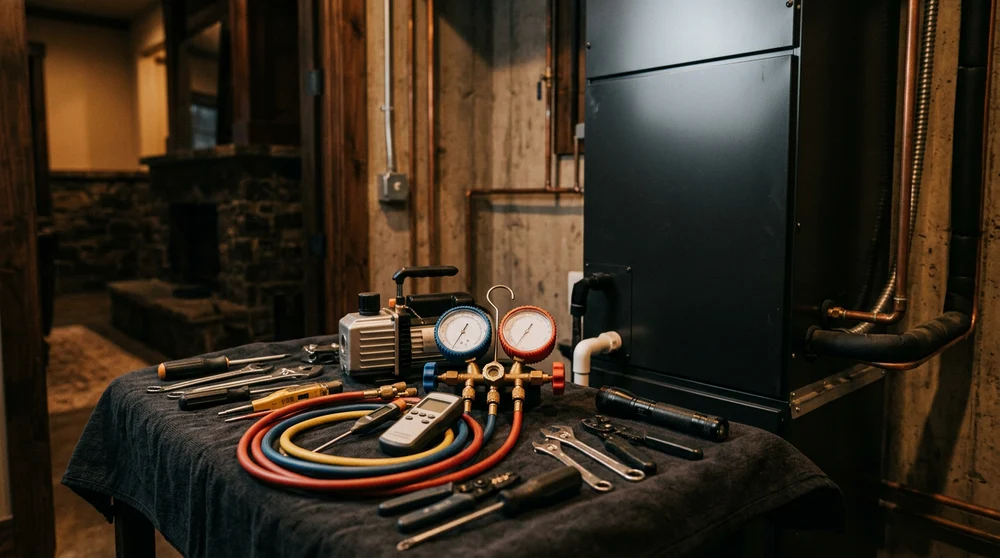
AI-generated illustration, not a customer home or project.
Discipline No. 01 — Air
AC and heat problems we assess and repair
- Air conditioning: units that will not start, will not cool, ice over, or are low on refrigerant
- Furnaces and heat pumps: no heat, a burner that will not light, or a fan that will not turn
- The electrical parts inside your system, including switches, control boards and wiring
- Refrigerant leak diagnosis, with repair or component replacement options based on the location and condition of the affected part
- Assess
- Inspect the existing system
- Explain
- Review the proposed scope
- Verify
- Check operation after work
— Ask about the proposed scope and current terms before approving work.
Schedule ServiceCompare the repair options
A diagnosis and a remedy are different decisions. Ask how the proposed work addresses the finding and what it leaves unchanged.
- Repair an identified fault. Ask what failed and why the proposed repair suits it.
- Replace an affected component. Discuss whether repair is appropriate given the part's location and condition. Adding refrigerant alone does not correct a leak.
- Compare system replacement. Weigh system condition, repair history, safety findings and comfort needs. Age or one estimate does not settle the decision.
The Texas AirZone method
How the repair proceeds
- Inspect and test. Review symptoms and service history, then check relevant airflow, pressure, refrigerant, electrical or control conditions.
- Explain. Discuss the findings, uncertainties and repair options.
- Approve. Ask about the repair scope and current terms before authorizing work.
- Repair. Complete the agreed work with attention to the home and its finishes.
- Test. Run the system, check performance relevant to the repair and review any remaining concerns.
Why a problem can return
Recurring symptoms may involve an intermittent fault, an unresolved condition or a different component. They do not prove the previous repair was wrong. Note when the problem returns and what changed since the last visit.
Outdoor-unit damage or debris may also affect performance. Inspection, rather than an assumption about age or weather, helps determine whether it contributes.
Schedule repair or discuss a major decision
Choose service for no cooling, no heat or an active fault. Choose a private consultation for a major repair or replacement decision; ask whether an existing proposal is suitable for a second-opinion review. A diagnostic fee applies. Confirm current diagnostic pricing and the visit scope when scheduling.
- Describe what the system does, when the symptoms began and which rooms are affected.
- Share recent service history or an existing proposal if you have it.
- Mention any access concerns. Leave equipment panels and electrical or refrigerant work to the technician.
Should I repair or replace my HVAC system?
The decision depends on the equipment's condition, repair cost, reliability, efficiency, and overall system performance. Major repairs on older or repeatedly failing systems may make replacement worth considering, while otherwise reliable equipment may still be a good repair candidate.
Why does my HVAC system keep having the same problem after repairs?
Recurring HVAC problems can happen when the underlying cause has not been fully corrected. Examples include refrigerant leaks that were recharged without addressing the leak or electrical issues that continue after replacing one failed component. A complete diagnostic should focus on the root cause rather than only the immediate symptom.
Could hail be the reason my AC has quietly gotten worse?
Hail can damage the coil fins on an outdoor unit and affect airflow or heat transfer. Reduced cooling can also have other causes, including debris, refrigerant problems, controls or indoor airflow. An inspection of the outdoor unit and system testing help determine whether storm damage is contributing.
Does Texas AirZone charge an HVAC diagnostic fee?
Yes. Texas AirZone charges a diagnostic fee, with pricing varying by service time and schedule. Current diagnostic pricing should be confirmed when booking service.
Does a refrigerant leak always need to be sealed?
The remedy depends on where the leak is and the condition of the affected component. Some leaks can be repaired; others may require component replacement. Adding refrigerant alone does not correct a leak. Diagnosis comes before choosing the remedy.
Can you review another contractor's repair or replacement recommendation?
Ask whether your diagnosis or proposal is eligible for a second-opinion review. Share the findings and proposed scope when scheduling. Availability and current review terms are confirmed for your request.
How quickly can Texas AirZone respond to an AC or heating repair call?
Texas AirZone provides extended seven-day response across Dallas–Fort Worth and prioritizes no-cooling and no-heat situations during extreme weather. Appointment timing depends on location, symptoms, and current availability.
Does Texas AirZone repair all major HVAC brands?
Texas AirZone services and repairs major makes and models of residential heating and air-conditioning equipment, including systems originally installed by other contractors.
Is financing available for major HVAC repairs?
Financing may be available for qualifying major HVAC repairs and new systems. Current terms and eligibility should be confirmed when service is requested.
How much does AC repair cost in Dallas–Fort Worth?
AC repair costs depend on the fault, replacement parts, system access, and labor involved. Texas AirZone diagnoses the system and explains the recommended work and pricing before you authorize a repair. Ask for the current diagnostic charge when scheduling.
Why is my AC running but not cooling my home?
An air conditioner can run without cooling properly when airflow is restricted, coils are dirty or frozen, refrigerant is leaking, controls are malfunctioning, or a mechanical or electrical component is failing. We test the complete system to identify the actual cause before recommending a repair.
Why won't my air conditioner turn on?
An AC that will not start may have a thermostat or control problem, a tripped electrical component, a failed capacitor or contactor, a safety shutoff, or another system fault. If basic thermostat and breaker checks do not restore operation, we can diagnose the electrical and mechanical systems to find the cause.
What causes an air conditioner to freeze up?
A frozen AC can be caused by restricted airflow, a dirty filter or coil, blower problems, low refrigerant from a leak, or operating conditions that keep the coil too cold. Ice is a symptom rather than a diagnosis, so the system should be inspected before it is repeatedly restarted.
Choose the next step
Understand the problem. Plan the right work.
Use service scheduling for a current problem, or request a consultation for a duct, comfort or replacement project. After you send an inquiry, the team will follow up to confirm the next step and current availability.
(469) 382-2701Mon–Fri, 7 AM–6 PMSat–Sun, 8 AM–12:30 PMEmergency service is available outside regular hours when needed.